India runs on two wheels. Bikes and scooters are how most of the country commutes — and they account for a huge share of the lives lost on our roads every year. When a rider goes down, the first responders often face the same avoidable problem: they have no idea who the injured person is. An emergency ID fixes exactly that.
The two-wheeler risk in India
Riders are the most exposed people on the road. There's no metal cage, no airbag, and a crash at even moderate speed can leave someone unconscious by the roadside. Two things then work against them:
- Identity is lost. A helmet, an injury or an unconscious state means a rider often can't say their own name, let alone their blood group or who to call.
- Time is lost. While bystanders search pockets for a phone that may be locked or shattered, the clock on treatment keeps running.
These delays land right in the golden hour — the window when fast, correct treatment matters most. Every minute a helper spends working out who you are is a minute not spent getting you the right care.
It's worth being honest about the odds. Riders make up a disproportionate share of India's road fatalities, and a large number of those cases involve a head injury or an unconscious patient — exactly the situations where the person can't speak for themselves. Helmet laws exist because that risk is real; the same logic should extend to being identifiable after a crash, not only protected during one.
The problem of the unidentified victim
Hospitals across India admit accident cases every day with no name and no contact. Families spend frantic hours searching while a patient lies in an ER as "unknown." Treatment can proceed, but consent, medical history and reaching loved ones all stall. An unidentified rider is one of the most preventable tragedies on our roads — the information exists, it just isn't reachable.
A helmet protects your head in the crash. An emergency ID protects you in the hour after it.
Helmet plus tag: your two-layer safety kit
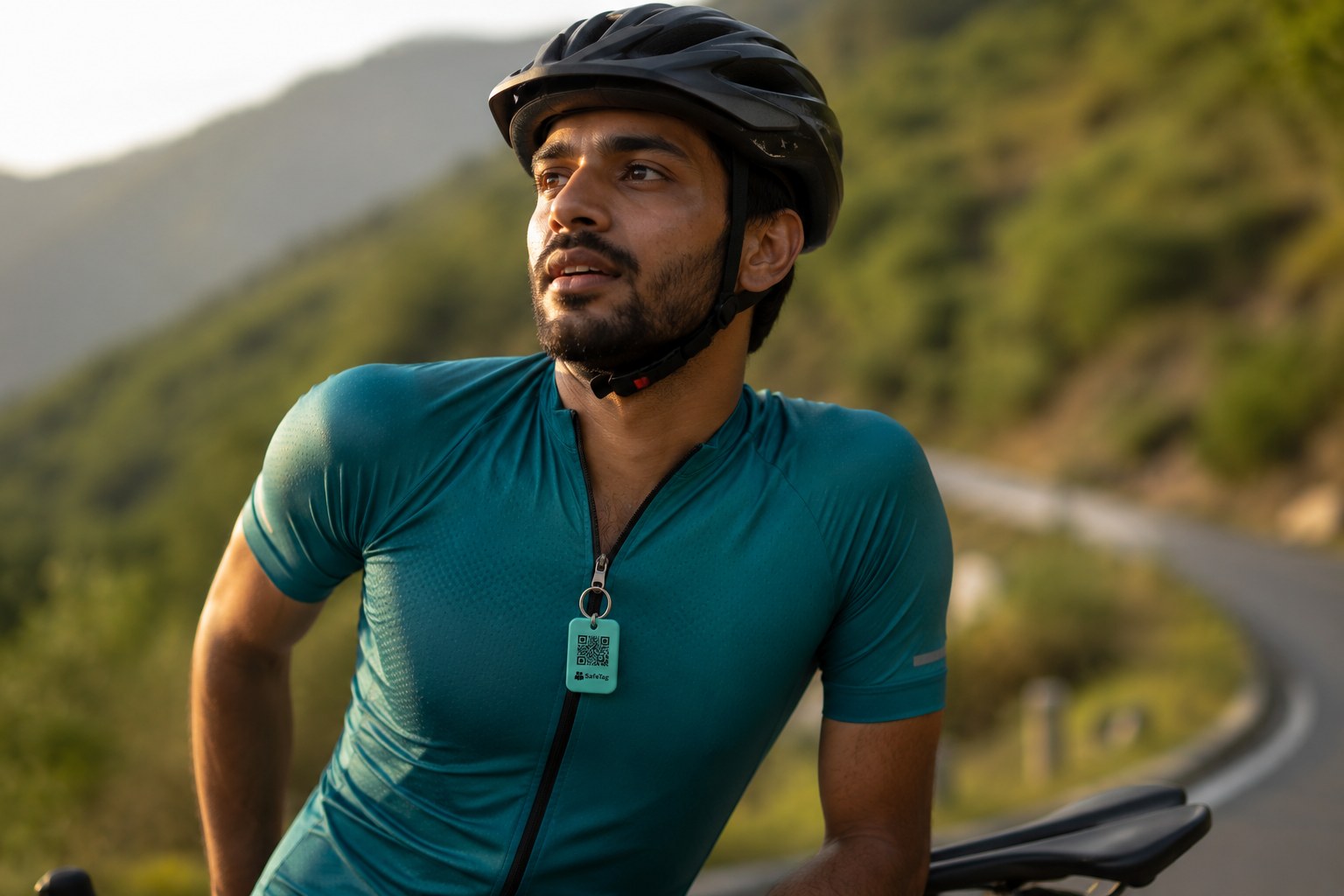
Think of protection in two layers. The helmet reduces the injury; the emergency ID makes sure that whatever happens next goes right. A SafeTag on your helmet strap, jacket, keychain or wrist means any bystander with a smartphone can scan the QR code or tap the NFC chip and instantly reach your emergency profile — no app needed on their phone.
In seconds, a stranger can see your name, call your family, and read out your blood group and allergies to the ambulance. To understand the full flow, see how SafeTag works in 3 steps.
What a rider's tag should say
Keep it focused on what a roadside responder needs first: your name, one or two emergency contacts, blood group, drug allergies, and any condition like diabetes or a heart issue. Our guide to what information should be on a medical ID tag covers the exact fields — and what to leave off.
Privacy on a tag anyone can scan
Because a rider's tag is out in the open, SafeTag reveals phone numbers only on tap rather than printing them, so a genuine helper reaches your family while casual scanners get nothing useful.
Not just for the daily commuter
Every kind of rider benefits, and some are more exposed than they think:
- Delivery riders spend hours on the road every day, often at speed and in heavy traffic — the highest exposure of all.
- Weekend and touring riders travel far from home on unfamiliar highways where no one recognises them.
- Students and young commuters whose parents' numbers may not be saved anywhere a stranger can reach.
- Cyclists and runners face the same identity gap on the road with even less protection.
Wherever you ride, the risk isn't only the crash itself — it's the minutes afterwards when no one knows who you are. A tag closes that gap for the price of a helmet strap.
Gear up before the ride, not after the crash
You wouldn't ride without a helmet because it's needed exactly when you can't plan for it. An emergency ID is the same kind of preparation — worthless in a drawer, priceless on your gear when a stranger needs to know who you are. Set one up today so your bike, your family and your first crucial minutes are all covered.
Pick a rugged keychain or wristband tag from the SafeTag store and ride knowing you can be identified in seconds.