A medical ID tag only works if it carries the right information — enough to guide a rescuer, but not so much that it becomes a privacy risk. So what exactly should be on it? Here's a clear, India-focused checklist of what to include, what to leave off, and how to phrase it so a stranger can act in seconds.
The core fields every medical ID needs
Think of a medical ID as answering the three questions a first responder asks first: Who is this person? What could hurt them? Who do I call? These essentials cover all three:
- Name — a first name is often enough for a responder to speak to you or confirm identity
- Blood group — critical if a transfusion is ever needed
- Allergies — drug allergies (like penicillin), food allergies, and insect stings
- Medical conditions — diabetes, epilepsy, asthma, heart conditions, pregnancy
- Current medications — especially blood thinners, insulin, or anti-seizure drugs
- Emergency contacts — one primary and one backup number
Blood group and allergies deserve special attention — they're the details most likely to change what a responder does in the first few minutes. We go deep on this in blood group and allergies: the details that save lives.
Why medications and conditions matter so much
Some information isn't just helpful — it can prevent a fatal mistake. If someone is on blood thinners, a responder treats bleeding very differently. If someone is diabetic and found unconscious, the team knows to check blood sugar immediately. A note that says "epilepsy — seizures may occur" stops a bystander from panicking and doing the wrong thing.
The same logic applies to allergies and implants. A person allergic to a common painkiller or anaesthetic could be harmed by the very treatment meant to help them. Someone with a pacemaker, a stent, or a metal implant needs that flagged before certain procedures. None of this is information a stranger can guess, but all of it fits in a line or two on a well-built tag.
The best medical ID says just enough for a stranger to help correctly — and nothing that helps anyone harm you.
What to leave OFF your tag
More is not better. Printing too much personal data turns a safety tool into a privacy liability, especially on a tag that lives out in the open. We recommend keeping these off the visible profile:
- Home address — a responder doesn't need it; a thief would love it
- Full date of birth or ID numbers (Aadhaar, PAN) — never put these on a public tag
- Bank or insurance details
- Long medical histories — keep it to what's relevant in an emergency
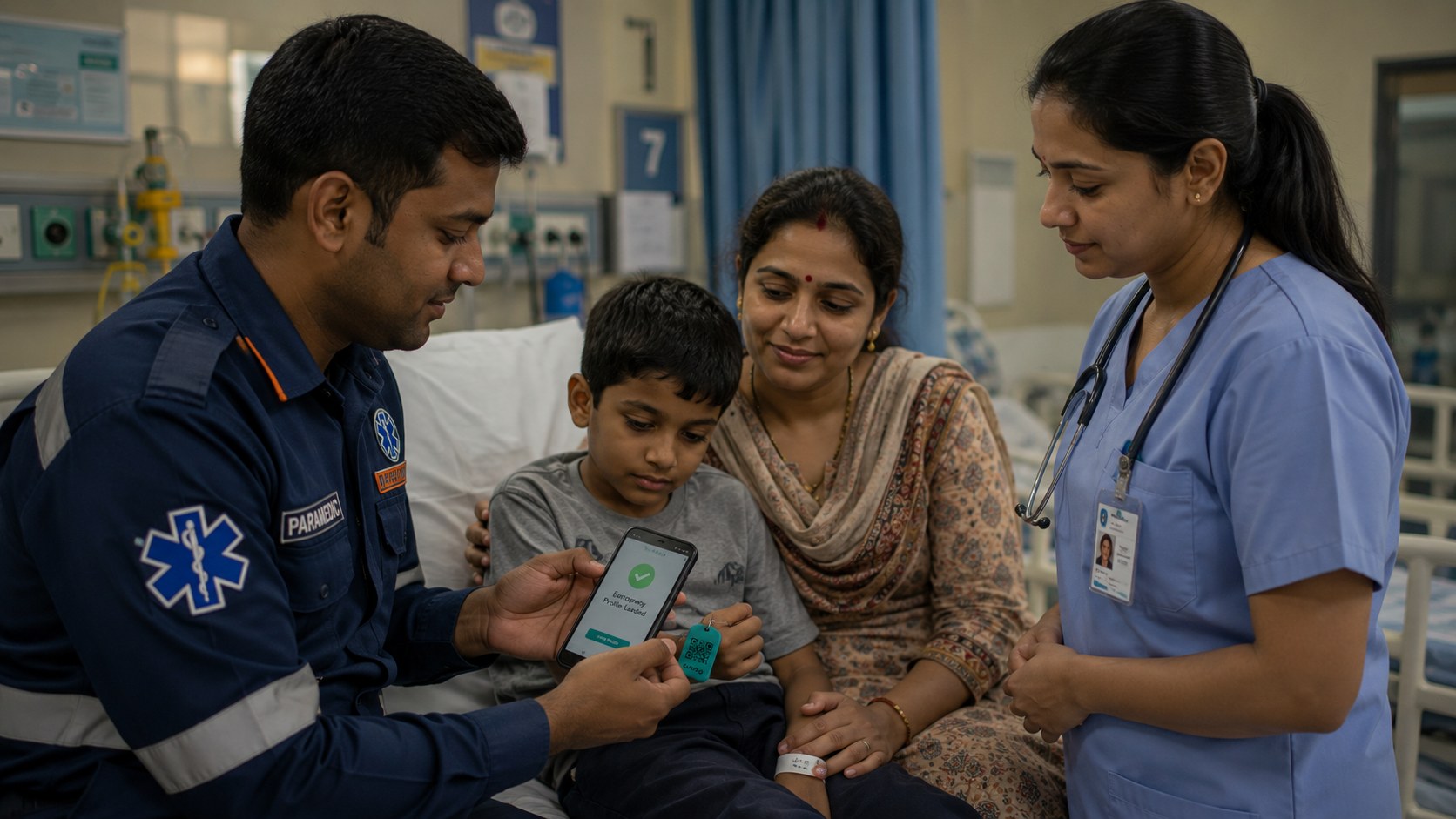
This is where how the tag stores data matters. A good digital tag lets you reveal phone numbers only on tap, rather than printing them in plain text — so casual scanners and bots can't harvest your contacts. That's a core part of how SafeTag works: your profile isn't searchable online and only opens when your physical tag is scanned.
Phrase it for a stranger, not a doctor
The person reading your tag may not be medically trained. Skip abbreviations only clinicians know. Instead of "T1DM," write "Type 1 diabetes." Instead of a drug's chemical name alone, add what it's for. Short, plain phrases beat technical precision when seconds count.
Special cases: tailor the tag to the person
The right fields shift depending on who wears the tag:
- Elderly parents or dementia patients — add a line like "may be confused, please call family." See our guide to emergency IDs for elderly parents and dementia patients.
- Children — a first name, parent contacts and key allergies are usually enough.
- Riders and athletes — blood group and contacts matter most; they're the people most likely to be found injured and unable to speak.
Keep it current
A medical ID is only as good as its last update. Medications change, contacts change numbers, new allergies get diagnosed. A digital tag has a big advantage over an engraved bracelet here: you can update your profile anytime without buying a new tag. Set a reminder to review it every few months and after any major health change.
Ready to build yours? A durable SafeTag lets you fill in exactly these fields and update them whenever life changes — browse options in the store.